The Repository - Canton, OH
- 2.8
- Rating
- 10.00K
- Installs
- Free
- Price

 Analysis by App-foxy
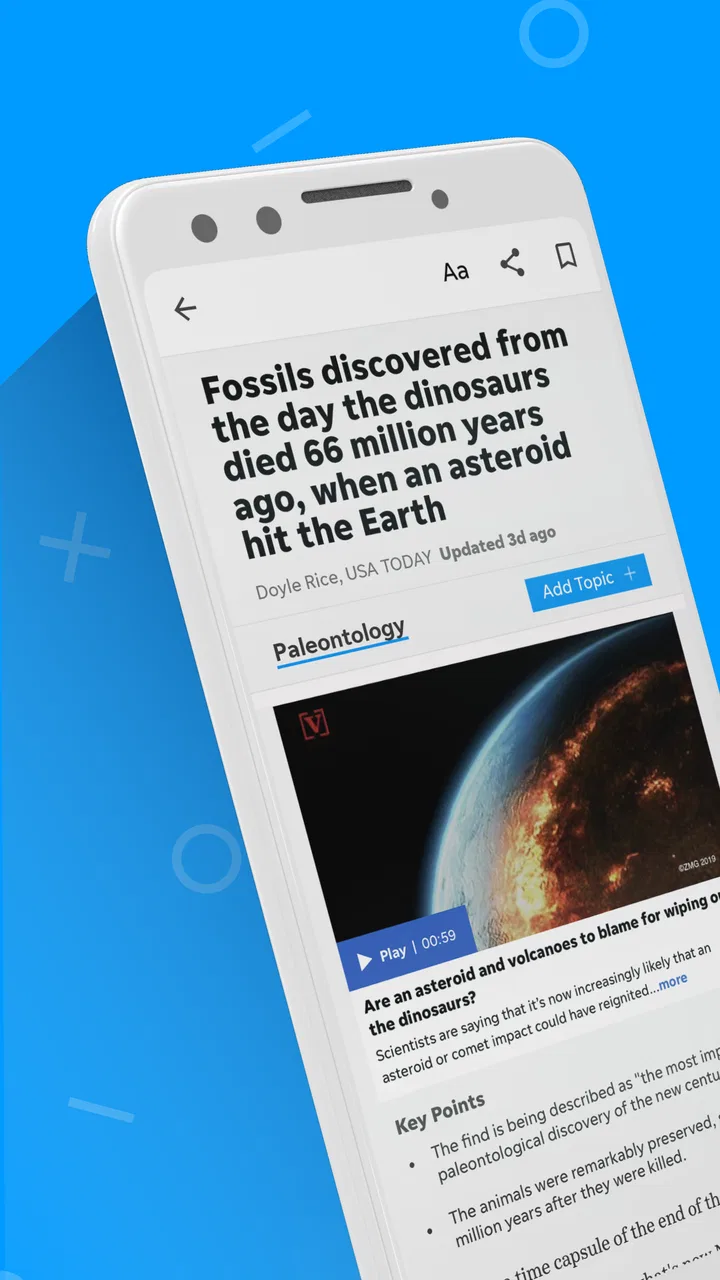
I found The Repository - Canton, OH most useful when I treated it as a quick local-news companion rather than a complete replacement for every news source on my phone. It comes from USA TODAY Co. and sits in the News & Magazines category, with a focus that feels especially relevant to readers who want nearby reporting alongside broader national coverage. The app is free to install, carries an Everyone age rating, and combines written stories with photography and video.
My first impression was that its value depends heavily on when and where I open it. With a dependable connection, it can turn a spare few minutes into a useful local catch-up. On a weak mobile signal, however, the experience becomes less predictable, particularly when a story includes rich media. That makes connectivity more than a technical detail here: it shapes how quickly I can get to the information and how comfortable the app feels during everyday use.
How the news experience changes with your connection
I find the connection question useful because it changes how I’d plan a reading session, not just how patient I need to be while a page loads. A reliable network makes it easier to move between text and visual coverage, while a weaker one calls for a more deliberate choice of what to open. That distinction leads naturally to the practical question of how I’d use the app during an ordinary day.
You May Also Like

 AccuWeather: Weather Radar
AccuWeather Review: A Quick, Clear Forecast for Everyday Decisions
For everyday plans, the best forecast is the one you can understand quickly. AccuWeather makes rain timing, radar, and local conditions easy to act on, with a few trade-offs.

 Hill Climb Racing
Why Hill Climb Racing Still Turns Crashes Into One More Run
A tiny car, a bumpy hill and one more upgrade: Hill Climb Racing keeps resurfacing because its simple chaos makes every near-miss feel personal.

 AliExpress - Shopping App
AliExpress Makes Global Shopping Feel Personal, but Shoppers Bear the Risk
AliExpress turns a global marketplace into a pocket-sized discovery engine. Its reach is useful, its shopping loop compelling, and its trade-offs easy to miss.

 Lords Mobile: Kingdom Wars
Lords Mobile Is a Kingdom-Building Routine, Not a Quick Match
A case-by-case verdict on the building, battles, device demands, and social commitments that make Lords Mobile rewarding for some players and exhausting for others.

 PDF Scanner app - TapScanner
TapScanner Makes Paperwork Easier to Capture, Check, and Share
TapScanner makes scanning with a phone feel less like a rescue operation and more like a dependable step in getting work done. Its capture tools are useful, though not flawless.

 Block Blast!
 Shows How Much a Puzzle Game Can Leave Out
A quiet grid game shows why puzzle players increasingly value instant clarity, repeatable skill and low-pressure play—and where the genre still needs to catch up.
More From Our News Desk
View All News


When the network is doing the work
The Repository is at its best when I have enough bandwidth to move naturally between headlines, article pages, photographs, and video. The app’s published focus on local and national news gives it a practical two-level role. I can look for what matters around Canton, OH, then broaden my attention without immediately switching to a separate national-news application.
That combination is useful during a short morning routine. I might open the app while waiting for coffee, scan local headlines first, and then read one wider story before leaving home. The experience feels more worthwhile than a simple headline feed because visual reporting can add context, but it also means the connection has a direct effect on the presentation. Text tends to be the part I need most urgently; large images and video are the parts most likely to make a slow session feel stalled.
I would not judge the app solely by how it behaves on a perfect home network. News is often consumed in imperfect places: a parking lot, a bus stop, a crowded building, or a room where the signal changes from one minute to the next. In those situations, the app’s usefulness is tied to whether I can reach the essential story without waiting for every visual element to settle.
A practical habit is to decide what I want before opening it. If I only have a minute, I go straight for headlines and short article checks rather than browsing every media-rich item. If I have more time and a stable connection, the photography and video become a stronger reason to stay. That simple distinction helps me avoid blaming the app for a problem caused by trying to consume heavy content in a poor-signal moment.
A realistic day with The Repository
Imagine checking the app before work after hearing that something may affect the local area. I would use the local section to establish the basic situation, read the article for details, and then decide whether a national story adds useful context. Later, on a mobile connection, I might return to the same news cycle and watch a related video. That workflow is convenient because the app can serve both the immediate local question and the broader follow-up.
The trade-off is that the experience rewards selective reading. I would not open every story and play every video when I am away from reliable Wi-Fi. Instead, I would identify the articles that answer my question and leave visual extras for a better-connected moment. For me, that is the difference between using the app efficiently and letting a short news check become a slow, data-heavy browsing session.
Why rich media matters, and when it does not
Photography can make local reporting easier to understand, especially when the appearance of a place or event is part of the story. Video can also be more immediate than a paragraph when the story depends on scenes, movement, or a developing situation. These elements give the app a more complete feel than a plain list of text links.
Still, rich media is not automatically an advantage in every context. If I am standing somewhere noisy, using limited mobile data, or trying to read discreetly, a clear article is more valuable than a video preview. The app makes the most sense for people who appreciate visual journalism but are willing to manage when they consume it.
Using it in short mobile sessions
On a phone, I prefer a news app that supports several small visits instead of demanding one long reading session. This is where The Repository fits my habits reasonably well. I can check what is new, open one article, and leave. The local focus gives those short visits a purpose: I am not just scrolling through an endless stream of unrelated headlines.
Connectivity can interrupt that rhythm. A story that opens quickly at home may take longer when I am moving between networks. I therefore find it helpful to separate “quick check” behavior from “deep read” behavior. For a quick check, I stick to the most relevant headline and avoid opening multiple media-heavy pages. For a deeper read, I use a stable connection and give the article enough time to load properly.
This matters for commuters and anyone who reads news in fragments. The app is a better fit for a person who wants local awareness during several brief pauses than for someone expecting a fully uninterrupted reading environment everywhere. If your main news habit happens in places with unreliable service, that limitation should influence your decision.
When connectivity fails
The most frustrating news-app moment is not always a crash. Sometimes it is a page that appears partly ready but leaves an image, video, or article detail waiting. In that situation, I first try the simplest recovery: stop opening additional stories, return to the main feed, and retry one item after the connection settles. Repeated tapping usually creates more confusion than progress.
If the app feels slow, I also compare the behavior with another ordinary network activity. If other pages are struggling too, the connection is probably the immediate issue. If everything else works normally, restarting the app is a sensible next step. I keep my expectation realistic: a news application cannot fully control a weak signal, and visual content is naturally more demanding than a short headline.
The important point is that I do not rely on an interrupted session for urgent information. If a developing local story matters immediately, I use whatever dependable communication channel is available and return to the app when the connection is usable. The Repository is a reading tool, not something I would treat as an emergency alert system.
Recovery habits that save time
My preferred recovery routine is deliberately simple. I return to the main screen, wait briefly, and open only the article I actually want. If that fails, I close and relaunch the app rather than repeatedly refreshing several pages. I also avoid judging the whole service from one failed video load, because the text portion may still be perfectly useful.
Another helpful habit is to remember the distinction between a content problem and a network problem. If one article refuses to load while other parts of the app respond, I move to another story and come back later. If the entire feed is sluggish, I stop browsing until the connection improves. This prevents a temporary connectivity issue from turning into an unnecessarily frustrating reading session.
Being careful with mobile data
The app costs nothing to install, but free access should not be confused with cost-free usage in every situation. Your mobile plan may still matter when you browse photographs and video away from Wi-Fi. I would use the app freely on a home or workplace connection, then become more selective on cellular data.
My practical approach is to read text-first. I scan headlines, open the article that answers my immediate question, and skip video unless it genuinely adds something. I also avoid leaving the app open while casually scrolling without a purpose. That is not because every session will be expensive; it is because visual news can consume more data than a short text update, and the benefit is not equal for every story.
People who regularly watch news video on mobile should pay attention to their own plan and habits before making this a daily media destination. Someone with generous data and strong coverage may enjoy the visual side. Someone with strict limits may prefer a text-focused news source for routine checks and use this app selectively.
What the rating and platform details suggest
The app has an average rating of 2.8 from around 376 ratings, with 164 written reviews. I read that as a reason to approach it with practical expectations rather than assuming it will feel perfect on every device or network. A middling rating does not erase its local-news value, but it does make me more attentive to friction during installation, loading, and everyday navigation.
The current version is 8.10.3, and it requires Android 8.0 or later. That requirement is important for anyone using an older Android phone. The app is aimed at Everyone, so its subject matter and presentation are intended for a broad audience, although individual news stories can naturally cover serious topics.
USA TODAY Co. is the developer, and the app has passed the ten-thousand-install mark. It has been available since September 2011, which gives it the feel of an established publication app rather than a brand-new experiment. At the same time, a long presence does not guarantee that every interaction will suit every reader, so I would still judge it by your phone, signal, reading habits, and tolerance for media loading.
Where it fits among alternatives
Compared with a general national-news app, The Repository has a clearer local identity. That focus can reduce the effort needed to find Canton-area coverage, while a broad aggregator may offer more variety but require more filtering. Compared with a newspaper website in a browser, the app can feel more direct for repeated mobile checks, especially when I want a familiar news destination rather than a collection of search results.
A social-media feed may deliver local updates faster in some situations, but it also mixes reporting with commentary, reposts, and uncertain context. I prefer a publication-centered app when I want a more deliberate reading path. On the other hand, a dedicated national outlet may be better for readers whose main interest is international or political coverage and who rarely seek local reporting.
The strongest reason to choose this app is therefore not that it replaces everything else. It is that it gives local and national news a shared place, with photography and video available when the connection and the story justify them. The strongest reason to skip it is equally clear: if you need a very lightweight, text-only experience or depend on consistently weak mobile service, another option may be less frustrating.
Costs and expectations
The app is free, while in-app purchases are listed from $14.99 to $69.99 per item. I would check the purchase screen carefully before confirming anything, particularly if I only want casual access to headlines. The presence of optional purchases means the free starting point may not represent every possible path through the app, so I would pay attention to what is being offered during use.
For someone who reads local news often, the free entry point makes trying it straightforward. I would spend a few days using it in the places where I normally read: at home, on mobile data, and during short breaks. That test tells me more than a single fast session because it reveals whether the connection, media content, and reading rhythm fit my routine.
My connectivity verdict
After using it with connectivity in mind, I see The Repository - Canton, OH as a useful local-news app for readers who want nearby coverage without giving up national stories. Its photography and video make the experience more engaging when the network is strong, but they also make selective browsing sensible on mobile data or unstable service.
I would recommend it to a Canton-area reader who checks news in short sessions, values local reporting, and is comfortable switching between text and visual coverage. I would be more cautious recommending it to someone who expects every page to behave smoothly on a weak signal, wants a strictly minimal data footprint, or mainly follows news outside the local area.
My bottom line: choose it for local awareness and richer reporting, but use it deliberately when your connection or data allowance is limited. That balance is what makes the app worthwhile for me. It is not the only news tool I would keep, yet it can earn a regular place on the phone of anyone who wants a convenient connection to Canton news and broader stories in the same reading space.
FAQs for The Repository - Canton, OH
01What is The Repository - Canton, OH app used for?
The Repository - Canton, OH app is designed to give readers convenient access to local, regional, and national news from the Canton area. After installing it, users can browse breaking stories, community updates, sports coverage, entertainment, opinion articles, and other reporting from The Repository. It is intended for readers who want news on a smartphone or tablet rather than relying only on the newspaper’s website.
02Is The Repository - Canton, OH free to download and use?
The app can generally be downloaded without paying an installation fee, but access to all of its content may depend on the publication’s subscription policy. Some articles or features may be available to everyone, while unlimited reading, digital editions, or premium content could require a subscription or account. Before downloading, check the current in-app terms, pricing, and available trial options because access conditions can change.
03What kind of news and features are available in the app?
The Repository - Canton, OH focuses primarily on news relevant to Canton and surrounding communities, including local government, crime, education, business, events, and high school or professional sports. Depending on the current version, the app may also provide breaking-news alerts, article sharing, saved stories, photo galleries, videos, and digital newspaper access. Feature availability can vary by device, account type, and app updates.
04Does the app require an account or subscription?
You may be able to open and read some content without creating an account, but an account is often needed for personalized features, subscription access, saved articles, or the digital edition. If the app places articles behind a paywall, users may need an active digital subscription to continue reading after any free allowance is used. Review the sign-in and subscription details carefully before entering payment information.
05What permissions and internet connection does the app need?
The Repository - Canton, OH app requires an internet connection to download current articles, images, videos, and breaking-news updates. It may request permission to send notifications so it can alert you about important local stories; this permission can usually be disabled in your device settings. Mobile data usage may increase when loading multimedia content, so Wi-Fi is recommended if your data plan is limited.
Pros
- Provides convenient access to local repository information in one place.
- Useful for checking available resources before visiting a branch.
- Simple layout makes core information easy to find.
- Can help users stay informed about local services and updates.
- Helpful companion for existing library members in Canton
- Ohio.
Cons
- Its usefulness may be limited for people outside the Canton area.
- Some information may depend on timely updates from the library.
- Not all library services may be available directly through the app.
- Requires internet access for viewing current content and details.
- The app may feel basic compared with larger library platforms.

The Repository - Canton, OH
Gallery